Behind the Scenes Secrets That Changed How You Watch Movies
Behind the scenes movie secrets that change how you watch films. Production stories, practical effects, and creative decisions most audiences never discover.
Anúncios
Knowing how a magic trick works does not ruin the performance. Behind the scenes movie secrets add layers of appreciation that make rewatching films richer. These production stories reveal the creative problem-solving, happy accidents, and deliberate choices that shaped iconic movie moments.
Which Iconic Movie Scenes Were Complete Accidents?
Anúncios
Harrison Ford's gunshot response to the swordsman in Raiders of the Lost Ark happened because Ford had food poisoning and could not film the choreographed fight. The Shining's here's Johnny was Jack Nicholson's improvisation that Kubrick kept. Rain Man's fart scene between Dustin Hoffman and Tom Cruise was entirely unscripted.
The Lord of the Rings features a scene where Viggo Mortensen kicks an orc helmet and screams. The scream was real because Mortensen broke his toe on the kick. Peter Jackson kept the take because the genuine pain sold the character's anguish. These accidents become legendary precisely because they captured something real.
How Do Practical Effects Compare to CGI Behind the Scenes?
Anúncios
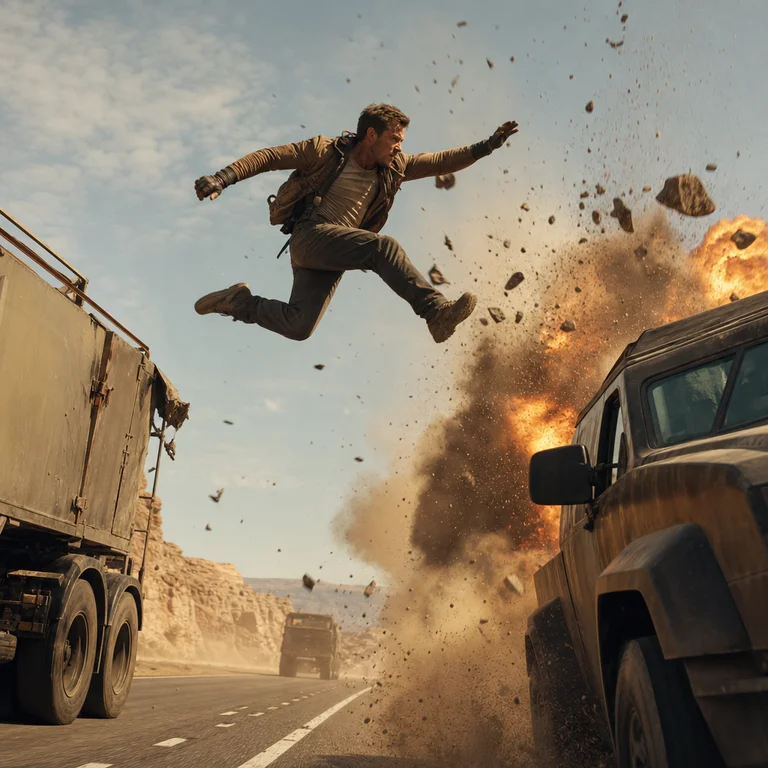
Mad Max: Fury Road built the majority of its vehicles and stunts practically, using CGI primarily for background enhancement and wire removal. The physical reality of actual cars flipping and actual people performing stunts creates a visceral impact that audiences feel subconsciously even when they cannot articulate why.
Christopher Nolan's commitment to practical effects includes flipping an actual semi truck for The Dark Knight, building a rotating hallway for Inception, and growing real corn fields for Interstellar. Each practical element grounds fantastical stories in tangible reality.
What Casting Decisions Nearly Changed Famous Movies?
- Will Smith turned down the role of Neo in The Matrix — Keanu Reeves defined it
- Tom Selleck was cast as Indiana Jones but could not leave Magnum P.I.
- Nicolas Cage was attached to play Superman in Tim Burton's cancelled version
- Emily Blunt was offered Black Widow before Scarlett Johansson
- Robin Williams wanted to play the Joker in Batman (1989) but was used as leverage
- Al Pacino turned down Han Solo — Harrison Ford improvised the audition
How Do Directors Hide Easter Eggs in Their Films?
Pixar embeds references to upcoming films in current releases, creating a tradition of frame-by-frame analysis among fans. The Pizza Planet truck appears in nearly every Pixar film. A113, a CalArts classroom number, shows up across Disney and Pixar productions as an homage to the animators' training ground.
Edgar Wright layers visual jokes that only reveal themselves on repeat viewings. Every word of dialogue in Shaun of the Dead foreshadows later events. Hot Fuzz plants clues about the villain's identity in background details visible only when you know where to look.
What Goes Into Creating Realistic Movie Sound Effects?
Foley artists create the sounds you hear in films using unexpected objects. Coconut shells produce horse hoofbeats. Snapping celery simulates breaking bones. Walking through cornstarch in a leather pouch creates snow-crunching sounds. Every footstep, door close, and glass clink gets recorded individually in post-production.
The Wilhelm scream, a stock sound effect recorded in 1951, appears in over 400 films as an industry inside joke. Sound designers insert it into action scenes as a tradition and challenge. Identifying it in films became a game among movie enthusiasts who recognize the distinctive yell.
How Do Actors Prepare for Extreme Roles?
Daniel Day-Lewis stayed in character as Lincoln throughout the entire filming period, with crew members addressing him as Mr. President. Christian Bale lost 63 pounds for The Machinist and gained 100 pounds of muscle for Batman Begins within six months. Jared Leto sent disturbing gifts to Suicide Squad cast members in character as the Joker.
Method acting generates publicity but its effectiveness is debated within the industry. Many accomplished actors achieve equally powerful performances through technical craft without staying in character off-set. Anthony Hopkins memorized his Silence of the Lambs script 250 times but stepped out of character between takes.
What Budget Constraints Led to Creative Breakthroughs?
Jaws could not show the shark because the mechanical prop kept breaking. Spielberg's forced restraint created more tension through suggestion than any visible monster could have achieved. The constraint transformed a creature feature into a masterpiece of suspense filmmaking.
The Blair Witch Project cost $60,000 and grossed $248 million by using budget limitations as the core aesthetic. Paranormal Activity followed the same model at $15,000. These films proved that creative constraints often produce more distinctive results than unlimited resources.
How Does Color Grading Change the Mood of Films?
The Matrix uses a green tint for scenes inside the simulation and blue tones for the real world. Mad Max: Fury Road saturates warm oranges and cool blues to create its distinctive visual palette. Color grading occurs in post-production and can completely transform the emotional tone of filmed footage.
Modern blockbusters tend toward a teal and orange color scheme because these complementary colors make skin tones pop against backgrounds. Independent films use more varied color palettes as a deliberate distinction from mainstream visual language. Wes Anderson's pastel palettes became a recognizable brand through consistent color choices.
Which Deleted Scenes Would Have Changed Entire Movies?
Alien had a deleted scene revealing what happens to captured crew members that transforms the xenomorph threat from predator to something more disturbing. The Shining originally ended with a hospital scene that Kubrick personally retrieved from theaters and destroyed after opening weekend.
Extended editions of Lord of the Rings add over two hours of material that deepens character arcs and plot threads. Some deleted scenes improve the film while others justify their removal. The editorial process of cutting good material for the sake of pacing represents one of filmmaking's most difficult creative decisions.
How Movie Scores Shape Your Emotional Response
Film composers write music designed to manipulate emotions with surgical precision. Hans Zimmer's Inception horn became a cultural touchstone that influenced trailer music for a decade. John Williams's two-note Jaws theme created fear from simplicity. These scores work on audiences subconsciously, directing emotional responses without conscious recognition.
Removing the score from any tense scene reveals how much emotional heavy lifting the music performs. The shower scene in Psycho without Bernard Herrmann's shrieking strings becomes merely uncomfortable rather than terrifying. Composers are invisible collaborators whose contribution often exceeds the visual component in emotional impact.
Why Knowing Production Details Enhances Rewatching
Behind-the-scenes knowledge transforms passive viewing into active analysis. Knowing that a particular stunt was performed practically adds visceral appreciation. Understanding a director's thematic intent reveals layers invisible on first watch. Production context turns entertainment into a richer, more engaging experience.
Director commentary tracks on streaming platforms provide direct insight from filmmakers themselves. Video essays on YouTube break down cinematography, editing, and sound design choices. Film podcasts interview crew members whose contributions shape the final product. These resources create a lifelong learning path for film appreciation.