Film Photography vs Digital: How Cameras Shape Movie Aesthetics
Film vs digital cameras in movies. How shooting format shapes movie aesthetics, why directors choose film, and how digital cinema changed the visual language of film.
Anúncios
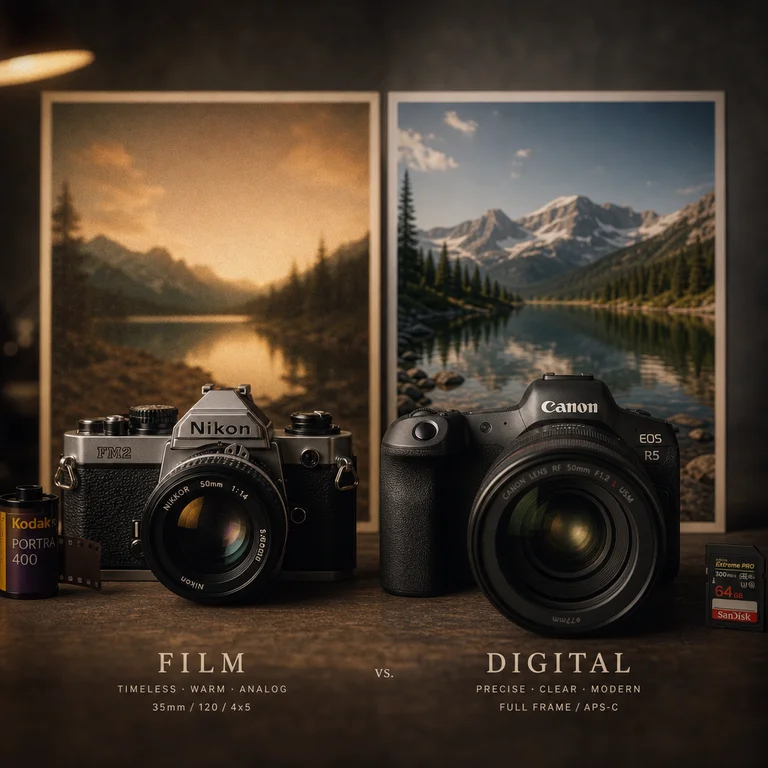
The debate between film vs digital movies goes beyond technical specifications into how audiences emotionally experience cinema. Film grain creates warmth and texture. Digital clarity reveals detail. Each format shapes the aesthetic and emotional character of the movies shot on it in ways most viewers sense but cannot articulate.
Why Do Some Directors Still Shoot on Film?
Christopher Nolan, Quentin Tarantino, and Paul Thomas Anderson insist on shooting film because it produces colors, contrast, and texture that digital cameras cannot perfectly replicate. Film's chemical process creates organic variation between frames that gives footage a living quality. Digital captures identically precise images frame after frame.
Anúncios
Shooting on film also disciplines the production process. Film stock costs money per foot, encouraging directors and actors to prepare more thoroughly before rolling camera. The limitation creates focused performances and considered compositions that the unlimited recording of digital can make less urgent.
How Does Film Grain Affect the Viewing Experience?
Film grain is random variation in the silver halide crystals that form the image. This texture creates a warm, organic quality that the human eye processes differently from the clean precision of digital. Audiences associate grain with cinema itself because decades of moviegoing conditioned these expectations.
Anúncios
Higher ISO film stocks produce more visible grain, which certain genres exploit aesthetically. Horror films use grain to create atmospheric unease. Period dramas use grain to signal historical authenticity. The deliberate use of film grain as a storytelling tool demonstrates how format choice serves narrative rather than just technical preference.
When Did Digital Cameras Become Good Enough for Cinema?
- 2002 — Star Wars: Attack of the Clones was the first major film shot entirely digitally
- 2007 — RED ONE camera made digital cinema affordable for independent filmmakers
- 2009 — ARRI Alexa launched and became the industry standard digital cinema camera
- 2012 — Digital surpassed film in total number of major studio productions
- 2016 — Over 90% of major films shot digitally
- 2024 — Film shooting persists as an artistic choice for select productions
What Does IMAX Film Look Like Compared to Digital IMAX?
True IMAX film uses 70mm 15-perf film stock with resolution equivalent to approximately 18K digital. No digital camera currently matches this resolution. Films shot on IMAX film like Oppenheimer and Dunkirk display breathtaking detail and color depth on proper IMAX screens that digital projection approximates but does not equal.
Most IMAX theaters now use digital laser projection rather than film projectors. The few remaining IMAX film projectors are pilgrimage destinations for cinema enthusiasts. Christopher Nolan's insistence on IMAX film distribution supports the survival of these projectors and the viewing experience they provide.
How Does Digital Change Cinematography?
Digital cameras perform better in low light than film, enabling handheld shooting in natural conditions that film required artificial lighting to expose properly. This technical advantage produces naturalistic visual styles impossible on film. Barry Lyndon's candlelit scenes required custom NASA lenses. Modern digital cameras capture candlelight without modification.
The ability to review footage immediately on set changed directorial workflow. Film required waiting for developed dailies. Digital playback enables instant feedback and reshooting. This immediacy improves efficiency but also enables perfectionism that extends production schedules beyond what film-era limitations enforced.
Which Films Used Their Format as a Storytelling Choice?
Dunkirk shot on 65mm IMAX film to create the immersive scale appropriate for its war story. Collateral shot digitally to capture Los Angeles nightlife with naturalistic lighting that film could not manage. Each production chose its format based on which technology served the specific story rather than defaulting to industry standards.
The Florida Project mixed 35mm film for its main narrative with iPhone footage for its conclusion, using format shift to signal narrative transition. Tangerine shot entirely on iPhones to prove that compelling cinema depends on storytelling rather than camera technology. These deliberate format choices demonstrate creative intentionality.
Can Audiences Tell the Difference Between Film and Digital?
In blind tests, most viewers cannot consistently distinguish modern high-end digital from film. The ARRI Alexa specifically was designed to emulate film characteristics. Digital color grading can add simulated grain, color shifts, and contrast curves that approximate film's look. The gap has narrowed to the point where format choice is genuinely artistic rather than technically necessary.
Trained eyes notice differences in motion rendering. Film's 24fps with natural motion blur produces a specific look that digital cameras replicate differently. Highlight rolloff — how the brightest parts of the image transition — differs between film's gradual chemical response and digital's harder cutoff. These subtle distinctions matter to cinematographers and attentive viewers.
Is Film Photography Dying or Having a Revival?
Kodak reported increased film stock demand from Hollywood productions in recent years. Christopher Nolan and Quentin Tarantino's vocal advocacy for film preservation keeps the format viable. Film labs that nearly closed have stabilized with renewed demand. The format is not dying but transitioning from default to deliberate artistic choice.
Small-format film photography experienced a cultural revival through Instagram and TikTok aesthetics that value analog texture. This consumer interest in film photography indirectly supports cinema film stock production by maintaining the manufacturing infrastructure. The aesthetic preference for analog qualities sustains the medium beyond industrial necessity.
How Does Format Affect Streaming Viewing?
Films shot on celluloid and scanned at high resolution maintain their texture through streaming compression better than originally digital content. Film grain survives compression more gracefully than digital noise. Paradoxically, content shot on film can look better on streaming platforms than content shot digitally at equivalent bitrates.
Most streaming viewers will never see content in its intended theatrical format. The gap between a 70mm IMAX presentation and a compressed 4K stream is enormous. Understanding what format a film was designed for helps viewers calibrate expectations and, when possible, seek the ideal viewing conditions.
The Future of Cinema Cameras
Digital cinema cameras will continue improving in dynamic range, resolution, and color science. Film will persist as an artistic choice rather than a technical necessity. The most interesting future developments involve computational photography, where AI processing enhances captured footage in real-time during shooting.
Virtual production using LED volumes, pioneered by The Mandalorian, merges in-camera practical effects with digital backgrounds. This hybrid approach creates a new category that is neither purely practical nor purely digital. The format wars resolve not in one technology winning but in creative synthesis.