How Movie Franchises Changed the Way Hollywood Makes Films
How movie franchises changed Hollywood filmmaking from original stories to interconnected universes. The impact on creativity, budgets, and independent film.
Anúncios
Hollywood transformed from a town that made movies into a franchise factory over the past two decades. Movie franchises now dominate box office revenue, production budgets, and studio strategy to the point where original mid-budget films struggle to find theatrical distribution.
When Did Franchises Start Dominating Hollywood?
Anúncios
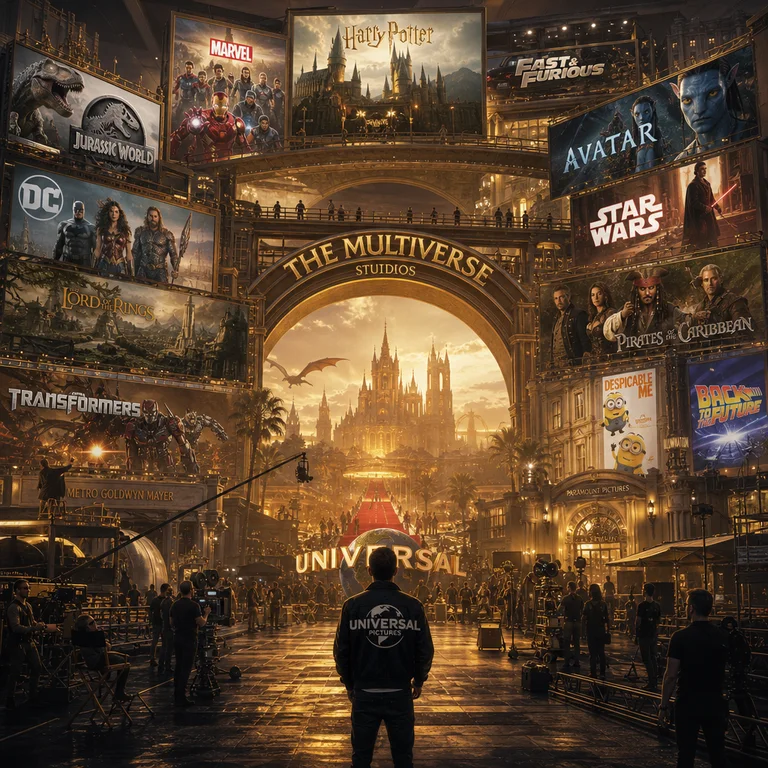
Jaws and Star Wars in the 1970s introduced the blockbuster concept, but individual films still stood alone commercially. The shift toward franchise dominance accelerated in the 2000s when Harry Potter, Lord of the Rings, and Spider-Man proved that multi-film properties generated exponentially more revenue than standalone films.
Marvel's Iron Man in 2008 perfected the modern franchise model. Building an interconnected cinematic universe where each film promoted the next created a self-reinforcing economic engine. Studios stopped asking whether a film could be successful and started asking whether it could spawn a franchise.
How Did the MCU Change Franchise Planning?
Anúncios
Before Marvel, sequels were reactive. A successful film got a sequel if audiences demanded it. Marvel inverted this by planning interconnected stories across a decade of films before the first one proved successful. This proactive planning influenced every studio to map franchise roadmaps years in advance.
The shared universe model spread to DC, Universal's Dark Universe attempt, Sony's Spider-Verse, and Legendary's MonsterVerse. Most failed to replicate Marvel's success because they prioritized universe-building over individual film quality. Marvel succeeded because each film worked independently while contributing to a larger narrative.
What Happened to Original Mid-Budget Movies?
Studios redirected resources from $30-$80 million original films to franchise entries costing $150-$300 million. The economic logic is straightforward: a franchise film with built-in audience awareness carries less marketing risk than an original property requiring audience education from zero.
Original mid-budget films migrated to streaming platforms where they thrive without theatrical box office pressure. Netflix, Apple TV+, and Amazon produce the types of $40-$70 million dramas, thrillers, and comedies that studios abandoned. The creative space exists but shifted venues.
Which Franchises Generate the Most Revenue?
- Marvel Cinematic Universe — $30+ billion combined box office
- Star Wars — $10+ billion across all films
- Harry Potter / Wizarding World — $9.6 billion total
- James Bond — $7.8 billion across 25 films
- Fast and Furious — $7.3 billion and expanding
- Spider-Man (all versions) — $6.8 billion total
- Jurassic Park / World — $6.2 billion across six films
- DC Extended Universe — $6.1 billion total
How Do Franchises Affect Creative Freedom for Directors?
Franchise films operate within corporate guidelines that restrict directorial vision. Marvel's house style ensures visual and tonal consistency across films but limits the distinctive auteur approaches that characterize standalone films. Directors like Edgar Wright and Patty Jenkins departed franchise projects over creative differences.
Some directors navigate franchise constraints productively. Ryan Coogler brought Afrofuturist vision to Black Panther. James Gunn injected irreverent personality into Guardians of the Galaxy. The directors who succeed within franchises find creative expression within boundaries rather than fighting against them.
Is Franchise Fatigue Actually Happening?
Box office returns for franchise entries declined measurably after 2019. Several MCU films underperformed expectations. DC rebooted entirely. Disney scaled back Star Wars production. The market signaled that audiences will not automatically attend every franchise installment regardless of individual quality.
Franchise fatigue is selective rather than universal. Audiences tire of specific franchises rather than the concept entirely. Barbie and Oppenheimer proved in 2023 that distinctive films generate massive enthusiasm. The problem is not franchises but predictable franchises that treat audiences as guaranteed revenue.
What Role Do International Markets Play in Franchise Strategy?
China, India, and Southeast Asian markets drive franchise investment because action-heavy spectacle translates across cultures with minimal dialogue dependency. Films designed for global audiences prioritize visual storytelling and universal emotional beats over culturally specific humor or dialogue-driven drama.
The shift toward international revenue influenced casting decisions, location choices, and story elements. Studios add international cast members and filming locations to improve regional marketing. This globalization benefits representation but also homogenizes storytelling toward the lowest common denominator of cultural specificity.
How Do Streaming Platforms Approach Franchise Content?
Streaming platforms extended franchises into series format. Disney+ produces Marvel and Star Wars series between theatrical releases. Amazon invested $1 billion in Lord of the Rings: The Rings of Power. Netflix builds original franchise properties through series-to-film pipelines like The Gray Man.
The series format allows deeper character exploration and world-building than two-hour films permit. WandaVision and Loki explored character dimensions impossible within ensemble film running times. This expansion creates more content for subscriber retention while maintaining franchise engagement between theatrical releases.
Can Independent Films Compete With Franchise Dominance?
Independent films compete on different terms rather than challenging franchises directly. A24 built a brand around distinctive filmmaking that audiences specifically seek out. Everything Everywhere All at Once won Best Picture by combining indie sensibility with mainstream entertainment, proving audiences reward originality.
The theatrical window for independent films narrowed, but streaming distribution expanded their audience reach. Films that would have played two weeks in art houses now reach millions through streaming platforms. The definition of commercial success for independent films has changed, not disappeared.
What Does the Future of Movie Franchises Look Like?
Studios are adjusting franchise strategies after recent underperformance. Fewer films per franchise, longer gaps between installments, and higher individual quality standards mark the current approach. The era of releasing three to four franchise films per year from a single studio appears to be ending.
Original intellectual properties that become franchises organically will likely replace pre-planned multi-film roadmaps. The John Wick model of building a franchise incrementally based on audience reception rather than corporate planning represents a more sustainable approach than mapping five films before the first one opens.
How Franchise Culture Changed What Gets Greenlit
Every pitch meeting now includes the question of franchise potential. Studios evaluate scripts based on expandability rather than standalone merit. This filter kills projects that would make excellent individual films but lack obvious sequel or spinoff paths. The creative pipeline lost diversity of storytelling ambition.
The counterbalance comes from streaming platforms hungry for content volume. Netflix, Apple, and Amazon greenlight projects that studios pass on, creating alternative paths for filmmakers whose work does not fit franchise templates. The creative diaspora from studios to streaming may produce the next generation of distinctive voices.