TV Show Reboots That Actually Worked and Why They Succeeded
TV show reboots that actually worked. Why some revivals succeed while most fail, with examples from comedy, drama, and sci-fi that got the formula right.
Anúncios
For every successful reboot, five nostalgia-driven cash grabs disappoint audiences who loved the original. The TV show reboots that actually work share specific qualities that separate genuine revivals from shameless brand exploitation. Understanding what works explains why some reboots become cultural events while others die quietly.
What Separates Successful TV Reboots From Failures?
Anúncios
Successful reboots evolve the concept rather than repeating it. Battlestar Galactica transformed a campy 1970s space opera into a post-9/11 allegory about terrorism, democracy, and survival. The reboot respected the original premise while telling a fundamentally different story relevant to contemporary audiences.
Failed reboots rely on nostalgia as their primary appeal. Recognizable theme songs, returning actors in cameos, and recycled plots signal that the creative team has nothing new to say. When a reboot exists only because the brand is recognizable, the result feels hollow regardless of production quality.
Which Comedy Reboots Actually Captured the Original Magic?
Anúncios
Cobra Kai took the Karate Kid franchise and flipped the narrative perspective, making the villain sympathetic and the hero complicated. The show works because it challenges assumptions from the original films rather than reinforcing them. New characters carry the story while legacy characters evolve meaningfully.
One Day at a Time reimagined the 1975 sitcom through a Cuban-American family, addressing immigration, LGBTQ+ identity, and mental health with humor and heart. The reboot justified its existence by using the family sitcom format to explore stories the original could not have told in its era.
How Did Battlestar Galactica Become the Gold Standard for Reboots?
- Gender-swapped key characters including Starbuck and Boomer
- Replaced camp with documentary-style cinematography and realistic military culture
- Used sci-fi setting to explore post-9/11 political questions
- Killed main characters and destroyed expectations of plot armor
- Maintained the Cylons but reimagined them as indistinguishable from humans
- Created original characters alongside reimagined versions of the originals
Why Do Most TV Reboots Fail?
Nostalgia has a shelf life. The emotional connection to an original show lives in the specific cultural moment when audiences first experienced it. Reboots cannot recreate that moment because the audience, culture, and media landscape have changed. Attempting to bottle the same feeling in a different era produces uncanny imitations.
Original creative teams rarely return for reboots. New writers attempting to replicate distinctive voices produce approximations that feel off to fans of the original. The few reboots that retain original showrunners, like David Chase's potential Sopranos prequel involvement, carry stronger creative continuity.
Which Sci-Fi Reboots Exceeded Their Source Material?
Doctor Who's 2005 revival introduced the Time Lord to modern audiences with updated effects, serialized storytelling, and emotional depth absent from classic episodes. Russell T Davies balanced fan service with accessibility, creating a show that worked for new viewers without betraying decades of mythology.
Lost in Space on Netflix reimagined the campy 1960s series as a visually stunning survival drama. The reboot maintained the family dynamic while raising production values and stakes to compete with contemporary science fiction. Three seasons delivered a complete satisfying story arc.
How Do Streaming Platforms Approach Reboots Differently?
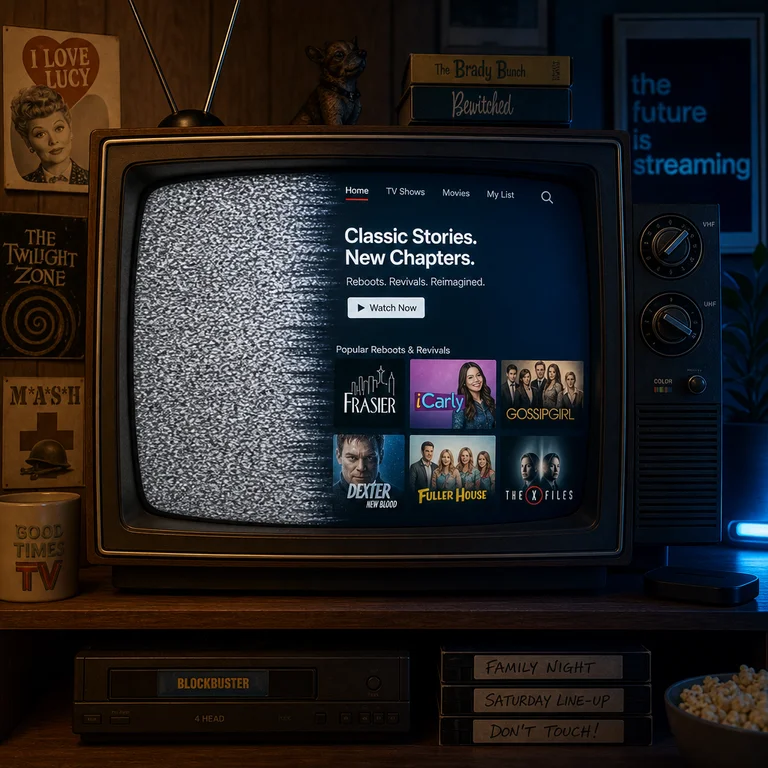
Streaming platforms greenlight reboots with built-in brand recognition to drive subscriptions. Peacock revived Saved by the Bell and Fresh Prince. Netflix brought back Unsolved Mysteries. Amazon rebooted A League of Their Own. The strategy uses nostalgia as a subscriber acquisition tool rather than pure creative ambition.
The streaming model allows reboots more creative freedom than network television. Shorter seasons, fewer content restrictions, and global audience data give showrunners room to reimagine properties without network interference. This freedom produces both ambitious reimaginings and lazier retreads.
Should Reboots Keep the Original Cast?
Returning cast members create instant audience connection but risk the reboot becoming a reunion special rather than a new show. Fuller House brought back the original cast and essentially replicated the original show's formula without evolution. Will and Grace's revival similarly struggled to justify its existence beyond nostalgia.
The strongest approach uses original cast members in supporting roles while new characters drive the story. Cobra Kai exemplifies this balance. Legacy characters provide emotional continuity while new characters introduce fresh perspectives and stakes. The audience gets recognition without stagnation.
What Legacy Sequels Work Better Than Traditional Reboots?
Legacy sequels continue the original timeline rather than restarting. Top Gun: Maverick honored the original while telling a new story that justified its existence. Creed took Rocky's legacy and passed it to a new protagonist whose story intersected with but did not replicate the original.
The legacy sequel model respects what came before while creating space for new stories. It avoids the uncanny valley of recasting beloved characters or pretending previous events did not happen. This approach works when the new protagonist earns the spotlight rather than simply inheriting it.
Which Cancelled Shows Rebooted Successfully on Different Platforms?
Veronica Mars moved from UPN to Hulu with a revival season that updated its detective stories for the streaming era. Arrested Development transitioned from Fox to Netflix with structurally experimental seasons. Each platform change brought new creative possibilities alongside challenges of meeting different audience expectations.
The platform switch can revitalize a show by removing the constraints that originally limited it. Content restrictions, episode length mandates, and demographic targeting change between networks and streaming services. Shows that felt constrained on broadcast television sometimes thrive with streaming freedom.
What Makes Audiences Accept Change in Rebooted Shows?
Audiences accept change when it serves the story rather than erasing what came before. Updating diversity, modernizing technology, and addressing contemporary themes all work when integrated organically. Forced changes that exist solely for marketing purposes generate backlash because audiences detect inauthenticity.
Transparency about creative intent helps audience acceptance. When showrunners explain their vision for reimagining a property, fans approach with open minds. Secrecy and defensive responses to criticism create adversarial dynamics that poison reception before the show premieres.
Are We Running Out of Shows to Reboot?
Every successful show from the 1980s through 2000s has been rebooted, announced for reboot, or discussed as a reboot candidate. The diminishing returns suggest the reboot trend will eventually exhaust available properties and audience patience simultaneously. Original content will reassert its value as nostalgia mining reaches saturation.
The healthiest reboot ecosystem would produce one or two thoughtful reimaginings per year rather than dozens of cash grabs. Quality control through selective revival preserves the cultural value of beloved properties while creating genuine creative opportunities. Less is demonstrably more in the reboot economy.